Buying courses is easy to record. Making room for someone to learn, apply an idea, and discuss the result takes a management decision. A training program can look complete on paper while depending entirely on employees finding extra time outside their working day.
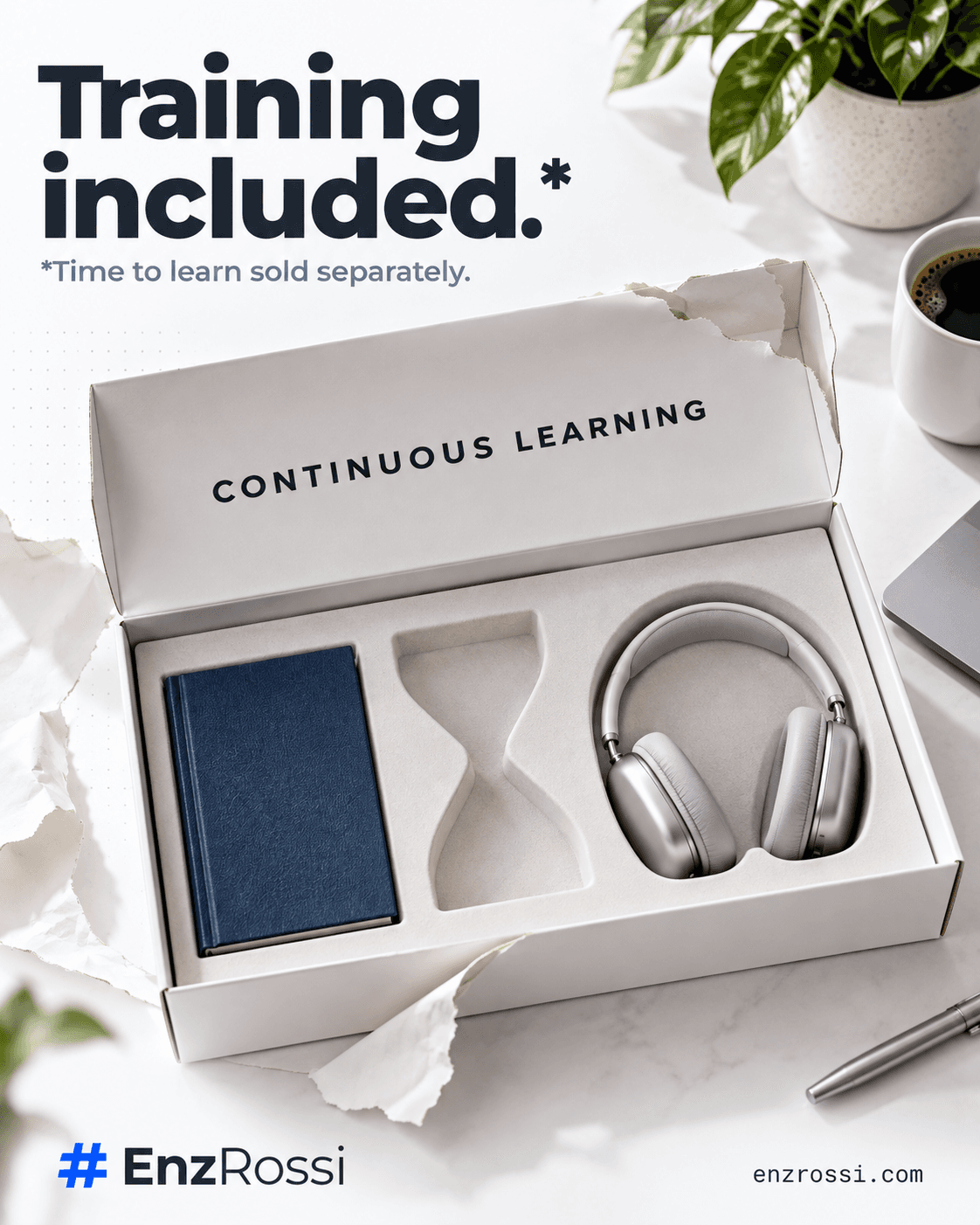
The empty hourglass compartment in our illustration represents that missing resource. Access to learning matters. It is not the same as a working environment in which learning can happen.
Connect training to a real capability
Begin with a problem the team needs to handle better. That might be evaluating AI-generated changes, designing clearer tests, explaining architectural tradeoffs, or taking ownership of an unfamiliar product area. Choose learning activities that support that capability.
Avoid starting with a large course catalog and treating completion as the outcome. A certificate can show that someone completed a learning activity. It cannot establish that the team can now make a better decision in a difficult situation.
Ask what evidence of application would look like. A reviewed example, a small improvement, or a clearer explanation of a tradeoff may be more informative than another badge on a dashboard.
Make the capacity tradeoff explicit
The World Economic Forum's 2025 skills outlook reported employers' expectation that 39% of workers' core skills would change by 2030. This is an employer forecast about changing skills, not an observed loss of ability or a statistic about jobs disappearing.
Your team's learning needs should still come from its actual work. If a new capability matters, decide what moves to create room for it. Reduce a commitment, protect a working block, or adjust the timeline. Calling training a priority while leaving every other expectation untouched makes the tradeoff somebody else's problem.
Managers need not promise unlimited study time. They should make a realistic agreement that people can use without quietly falling behind on their assigned work.
Close the gap between learning and practice
After a learning activity, ask the participant to apply one idea to an appropriate task and explain what happened. What worked? What did the material simplify? What still needs help? Use a safe environment when the work is unfamiliar or experimental.
Pair the learner with someone who can review the result. Make that review part of the plan rather than an unexpected favor. When an idea proves useful, place the example where the rest of the team can find and adapt it.
Sharing an unsuccessful attempt can also be valuable if it changes a future decision. Do not require every learning session to produce a success story.
Expect the same from an engineering partner
Ask how training connects to the roles and work in your engagement. A general statement about continuous learning is less useful than a clear explanation of how people stay current and evaluate new tools responsibly.
Continuous AI training is part of EnzRossi's positioning alongside senior LATAM talent and rigorous screening. Discuss the capability your team needs to build. The practical goal is better judgment and execution in the work, with time and support that make learning possible.