
Nearshore
Nearshore software development teams
Nearshore means hiring from countries that share your timezone and culture, not just your budget. LATAM fits US companies better than India or Eastern Europe for day-to-day collaboration because the hours overlap, the culture aligns, and the communication works.



Why nearshore
Why nearshore beats offshore
Same working day
Offshore teams in India or Eastern Europe have 8–12 hour time differences with US teams. That makes real-time collaboration nearly impossible. Nearshore LATAM gives you 5–8 hours of actual working-hour overlap, enough for standups, code reviews, and design discussions in real time.
Communication that works
Timezone alignment reduces the async communication tax. When something breaks at 2pm your time, your LATAM developer is still at their desk. That reduces the back-and-forth lag that slows offshore teams to a crawl.
Cultural alignment
LATAM developers work in similar communication styles to US teams: direct, async-comfortable, ownership-oriented. Most have English-language technical education and understand US product culture without translation.
Real savings without offshore trade-offs
Nearshore LATAM delivers 40–60% savings vs US hiring, nearly the same as offshore India, but without the timezone pain, communication delays, and handoff friction that make offshore teams harder to manage.
How EnzRossi works
We source across 8 LATAM countries and vet every developer through a seven-stage process: CV check, behavioral interview, two technical interviews, a take-home assessment, reference check, and background check. We evaluate technical depth, communication, AI tool fluency, ownership mindset, and cultural alignment, not just skills on a resume.
Faster to productive than offshore
Onboarding a nearshore developer takes days, not weeks. Shared timezone means you can pair them with your team immediately, run daily syncs, and get real feedback loops going from day one.
LATAM talent landscape
What nearshore LATAM looks like
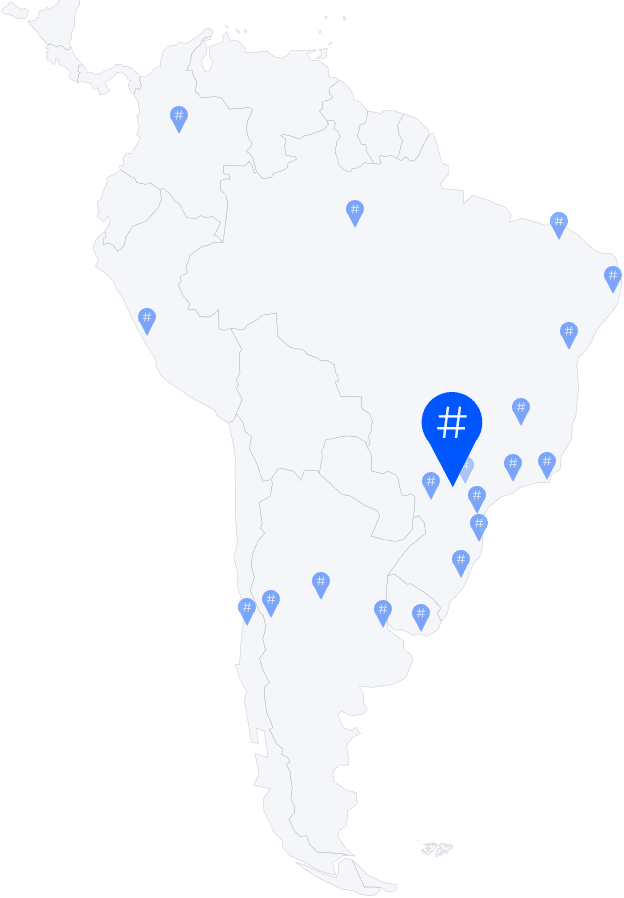
The nearshore LATAM developer market spans 1 million+ active engineers across Brazil, Argentina, Colombia, Mexico, Chile, Uruguay, Peru, and Costa Rica. Each country has a distinct strength profile: Brazil and Argentina for depth and seniority, Colombia and Peru for full EST overlap and competitive rates, Mexico and Costa Rica for near-US timezone fit and enterprise experience. Across the region, AI tool fluency is a real and growing differentiator. Our five-dimension vetting framework, which includes explicit evaluation of AI tool adoption as one of its five pillars alongside technical depth, communication, ownership, and cultural alignment, filters for engineers who work smarter, not just harder. The result is a shortlist of candidates who are faster and more productive than their rate suggests.
1M+
Nearshore developers
8
Countries we source from
7
Vetting stages
5%
Acceptance rate
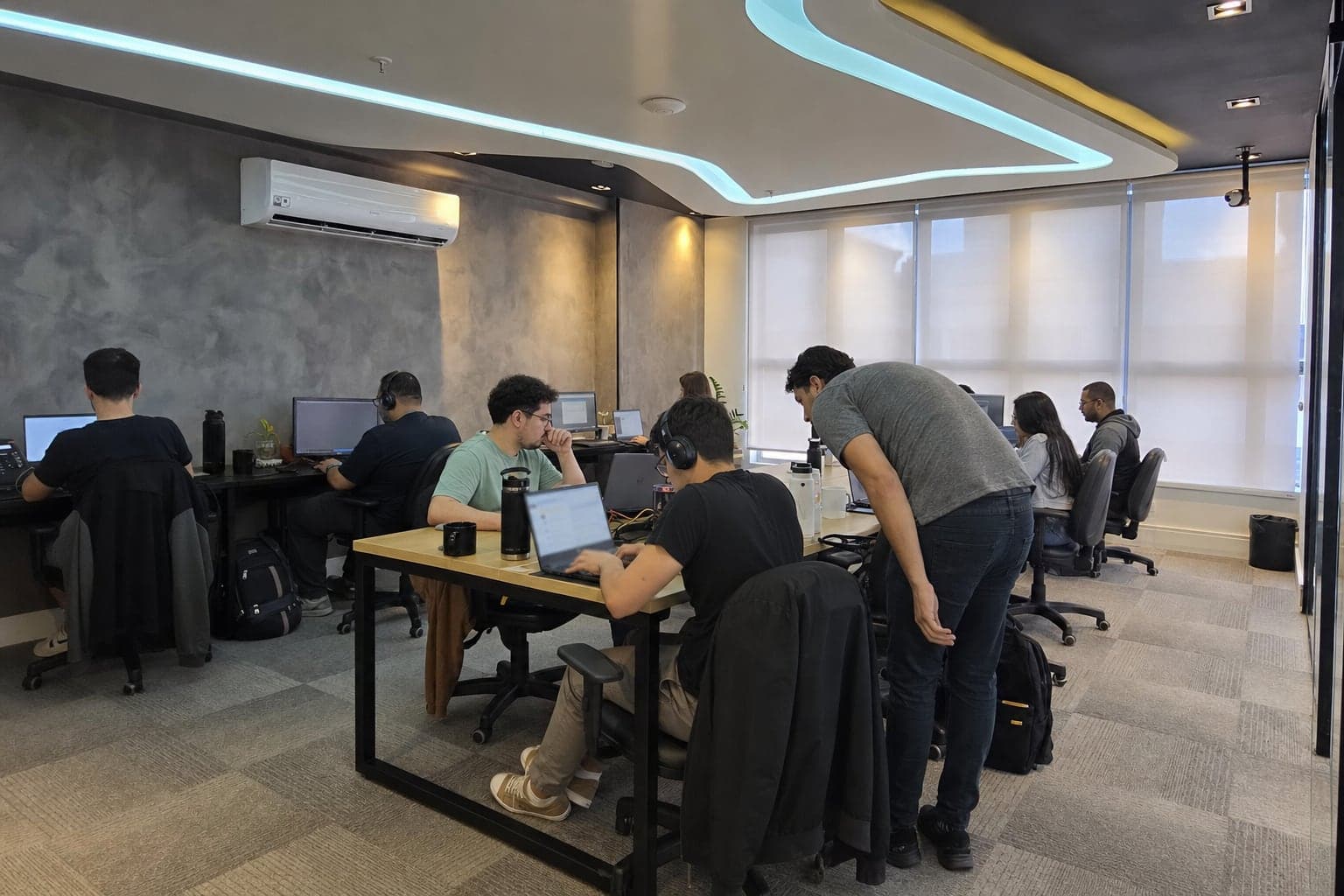
The EnzRossi team
Building remote teams that work
Top nearshore hubs
Best nearshore cities for US teams
São Paulo / Buenos Aires
UTC-3 (EST+2)
680+ / 420+ developers
Bogotá / Medellín
UTC-5 (= EST)
290+ / 140+ developers
Lima / Santiago
UTC-5 to UTC-4
160+ / 210+ developers
Córdoba / Montevideo
UTC-3
120+ / 115+ developers
Timezone
Working hours with LATAM nearshore
Switch to your timezone and hover any hour to see what time it is for your developer.
Hover any hour above to see the exact local time
Morning standup
9 AM EST
→ 9 AM local
WorksMidday sync
12 PM EST
→ 12 PM local
WorksAfternoon review
3 PM EST
→ 3 PM local
WorksEnd of day
5 PM EST
→ 5 PM local
Works
Hours shown reflect standard local working hours (9 AM – 6 PM). Companies and contractors can agree on different schedules.
Daily overlap
9 hours
9 AM – 6 PM EST
Best window
9 AM – 1 PM EST
For standups & reviews
For this TZ
Excellent
Real-time collaboration works
Nearshore cost comparison
Nearshore LATAM vs US hiring costs
| Role | Junior | Mid-level | Senior |
|---|---|---|---|
| Full-Stack Developer | $18k–$40k | $38k–$68k | $60k–$100k |
| Backend Developer | $16k–$38k | $36k–$65k | $58k–$95k |
| Frontend Developer | $15k–$36k | $34k–$60k | $55k–$90k |
| Mobile Developer | $18k–$42k | $40k–$70k | $65k–$100k |
| DevOps Engineer | $20k–$44k | $44k–$74k | $70k–$108k |
| AI/ML Engineer | $28k–$50k | $55k–$85k | $88k–$125k |
Rates in USD per year. Actual rates vary based on seniority, skills, and engagement model.
Browse by role
Popular roles from LATAM nearshore
FAQ
Common questions about nearshore development

Build your nearshore team.
Tell us the roles and seniority levels you need. First shortlist in 3 days.